Anxiety and Young People


Anxiety is the most common mental health difficulty young people face in Australia. It is also, and this gets said far too quietly, one of the most treatable.
If you're a teenager reading this, or a parent trying to work out whether what you're seeing is a phase — here is what anxiety actually is, what keeps it going, and what genuinely helps.
Anxiety isn't the problem. Stuck anxiety is.
Anxiety is a normal, useful system. It's the body preparing for a threat: heart rate up, breathing quick, attention narrowed. Before an exam or a game, that system is doing its job.
It becomes a difficulty when the alarm fires without a real threat, fires too often, or won't switch off afterwards. When it starts making decisions — which classes to skip, which parties to avoid, which friends to stop replying to — it has moved from a feeling to a force in someone's life.
That's the line worth watching. Not "is my child anxious?" — everyone is. But "is anxiety shrinking my child's world?"
What it looks like in young people
Anxiety in adolescence often doesn't announce itself as worry. It tends to arrive in disguise:
- Physical complaints — stomach aches, headaches, nausea, especially on school mornings
- Irritability and short temper, rather than visible fear
- Avoidance: of school, of social events, of anything unfamiliar or unpredictable
- Reassurance-seeking — the same question asked repeatedly, never quite settled
- Perfectionism, procrastination, or refusing to try things they might not be good at
- Trouble getting to sleep, with a mind that won't turn off
- Panic attacks — sudden, overwhelming physical surges that feel like something is medically wrong
The avoidance is the crucial one, because it's the engine. Avoiding the feared thing brings instant relief, which teaches the brain that the thing really was dangerous and that avoiding it was correct. The relief is real. The lesson is wrong. And the world gets a little smaller each time.
What makes it more likely
There is rarely one cause. Anxiety tends to emerge where temperament, circumstance and environment meet: a genetic predisposition, a naturally cautious temperament, stressful life events, academic pressure, social media and the exhausting business of being observable at all times, and the ordinary upheaval of adolescence itself.
It's also worth knowing that anxiety frequently sits on top of something else. Undiagnosed autism or ADHD very often presents first as an anxious, exhausted teenager who has been compensating for years. Treating the anxiety alone, in that case, tends to disappoint everyone — which is why neuroaffirming assessment matters.
What actually helps
Cognitive Behavioural Therapy is the best-established treatment for anxiety in young people. It works on two things at once: the thoughts that inflate the threat, and the avoidance that maintains it. The behavioural half — gradually, deliberately approaching feared situations in manageable steps — is the part that does the heavy lifting, and the part young people are most likely to dread and most likely to benefit from.
Mindfulness and relaxation approaches help with the physiological side: noticing the alarm without obeying it, and letting the body settle. They're a companion to treatment rather than a replacement for it.
Practical foundations matter more than they sound. Sleep, movement, and a limit on the 1am doomscroll change the baseline that everything else runs on.
School support — wellbeing coordinators, adjusted deadlines, a plan for exam anxiety — is free, already available, and consistently underused.
Medication is sometimes appropriate, usually in moderate to severe anxiety and typically alongside therapy rather than instead of it. Any decision about medication for a young person deserves careful assessment, a clear rationale, proper review, and a conversation that includes the young person themselves. If that comes up, we will collaborate with paediatric prescribers including paediatricians and child psychiatrists.
When to get support
Get help when anxiety is interfering with school, friendships, sleep or family life; when it has persisted for weeks rather than days; when panic attacks are occurring; or when you're not sure and you're worried. "Not sure, but worried" is a perfectly good reason to book.
And if a young person has self-harmed or spoken about suicide, act now: Lifeline on 13 11 14, or 000 in an emergency. Asking directly whether they're thinking about suicide does not plant the idea.
Victoria's mental health system is designed so that most young people reach care through primary care and community services rather than specialist ones — the Department of Health sets out how that fits together in its overview of Victoria's mental health services. headspace is free for 12 to 25 year olds, and worth knowing about.
Where to start
Anxiety often responds well to treatment. All evidence-based options will be explored collaboratively, according to preferences, and what is in the best interest of the person's wellbeing.
We provide adolescent counselling for young people from 12, and support for anxiety across all ages, at our Gisborne and Woodend rooms or via Telehealth. No GP referral or Mental Health Care Plan is needed — you can refer yourself, and Medicare rebates apply.
Get in touch when you're ready. Sooner is easier than later, but later is much better than never.
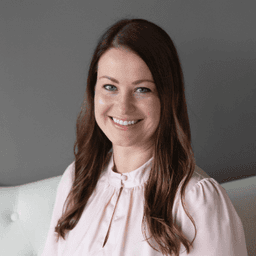
Lindsay Moncrieff, NP
Mental Health Nurse Practitioner
Master of Mental Health Nursing (Nurse Practitioner)
Lindsay is a Mental Health Nurse Practitioner with over 15 years' experience supporting teens and adults. She practises from Gisborne and Woodend, and via Telehealth.
Registered with the Australian Health Practitioner Regulation Agency (AHPRA) — registration no. 0001675831.