What Neuroaffirming Mental Health Care Actually Means


The starting assumption: difference, not deficit
The traditional clinical model treats autism and ADHD as collections of deficits — things a person can't do, measured against a neurotypical standard, to be reduced or corrected.
The neuroaffirming model starts somewhere else. Brains vary. Autistic and ADHD brains process attention, sensory information, social communication and time differently, and those differences bring real strengths alongside genuine difficulty. The difficulty is often not caused by the brain itself, but by the friction between that brain and an environment built for a different one.
This is not a semantic dodge, and it isn't a denial that people struggle. Autistic burnout is real. ADHD can impact a career. The point is that the goal of care is not to make you appear more neurotypical. It's to make life fit you better, and to help with what's actually hurting.
What that changes in practice
If a clinic says it's neuroaffirming, this is roughly what should follow:
- You can ask what the room is like before you come — lighting, noise, whether there's a waiting room you'd have to sit in
- Eye contact is not required, and not read as evasiveness
- Stimming, fidgeting, pacing or bringing a comfort object are unremarkable
- You can have questions in advance, and answer in writing if speaking is hard that day
- Sensory needs are accommodated rather than treated as symptoms to extinguish
- Goals are yours. "Masking better" is not a therapeutic aim; "exhausted less" might be
- Your self-identification is taken seriously, even without a formal diagnosis
- Language follows your preference — identity-first or person-first, your call, not ours
Masking, and what it costs
Masking is the effort of suppressing natural responses to appear neurotypical — rehearsing conversations, forcing eye contact, holding still, mirroring other people's expressions, containing a sensory response until you get to the car.
It works, in the sense that it gets you through the meeting. It is also enormously expensive. Adults who have masked for decades often arrive at mental health services with anxiety, depression and a bone-deep exhaustion, having been treated for those things repeatedly without anyone asking why they were so tired.
This is why so much neurodivergent mental health care begins with unmasking rather than with symptom management, and why a diagnosis in adulthood is so often experienced as relief rather than loss.
It's also why the self-esteem damage runs deep. Years of "you're not applying yourself," "you're too sensitive," "just try harder" leave a mark. Working on self-esteem with a neurodivergent adult means unpicking a lifetime of being told that the problem was effort.
The double empathy problem
For a long time, the difficulty autistic people have communicating with non-autistic people was framed as an autistic deficit in social skills.
Damian Milton's double empathy problem reframed it: communication breakdown between autistic and non-autistic people is mutual. Non-autistic people are just as poor at reading autistic communication as the reverse. Autistic people, communicating with each other, report much less difficulty.
The clinical implication is significant. If the misunderstanding goes both ways, then the burden of adaptation shouldn't fall on one side. It's my job as a clinician to be direct, to say what I mean, to skip the unspoken subtext — not yours to decode me.
Where this sits with the rest of your mental health
Being neurodivergent is not a mental illness. But neurodivergent people experience anxiety, depression, trauma and burnout at high rates — largely because of the fit between them and the world, not because of the neurology itself.
So neuroaffirming care isn't a separate service off to the side. It's how the ordinary work gets done: therapy that accounts for interoception and alexithymia, medication conversations that take sensory side effects seriously, and cognitive behavioural therapy adapted where a standard protocol wouldn't fit.
The Victorian Government's own framework for mental health and wellbeing emphasises services that respond to the needs of diverse communities rather than expecting people to fit a single service model. Neurodivergent people are one of those communities, and the principle is the same: the service adapts.
Being honest about the limits
We won't pretend to be everything. We don't offer full paediatric autism assessments, and if a formal diagnostic assessment is what you need, we'll tell you plainly and help you find where to get one.
We offer mental health care from a clinician who incorporates the principles of neuroaffirming care and a human rights approach in all interactions and recommendations. Lindsay is completing a Master of Autism and Neurodivergent Studies alongside her Nurse Practitioner practice. We are positioned not as an expert, but as a support to help you develop your own wisdom, strategies, and mindset to explore your mental health and improve your quality of life.
We also don't prescribe ADHD medication. You can read more about autism and mental health if that's the question that brought you here.
If you're looking for somewhere to be understood
We see teens and adults for counselling, assessment and medication support at Gisborne and Woodend, or via Telehealth — no GP referral or Mental Health Care Plan needed. Refer yourself, or get in touch and tell us what would make the first appointment easier. We'll do that.
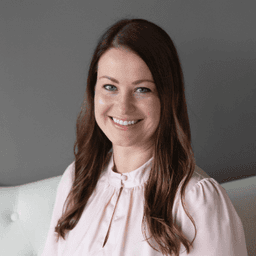
Lindsay Moncrieff, NP
Mental Health Nurse Practitioner
Master of Mental Health Nursing (Nurse Practitioner)
Lindsay is a Mental Health Nurse Practitioner with over 15 years' experience supporting teens and adults. She practises from Gisborne and Woodend, and via Telehealth.
Registered with the Australian Health Practitioner Regulation Agency (AHPRA) — registration no. 0001675831.